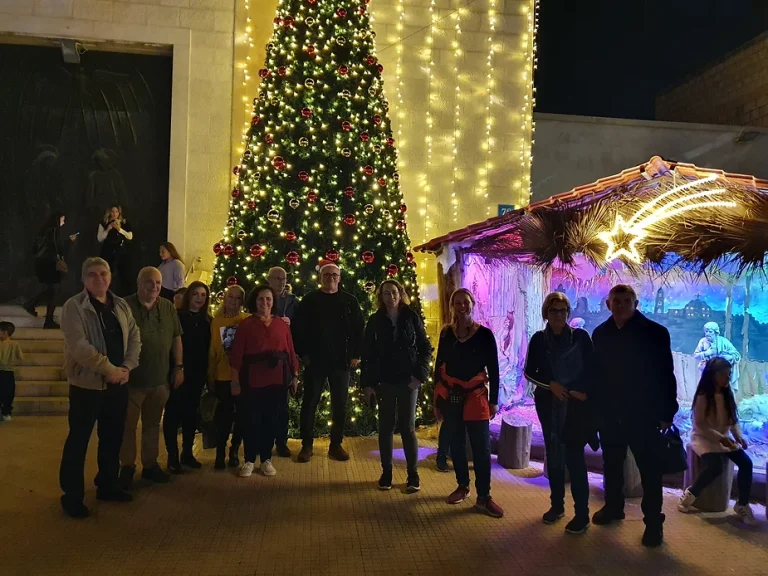
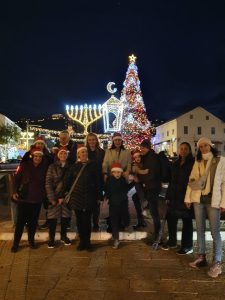
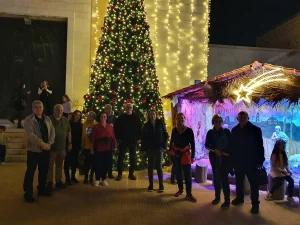
The symbol of the start of the holiday is the placing of the famous Christmas tree at the beginning of the German colony, at the intersection of Ben Gurion Boulevard and HaMeginim Boulevard.
The tree is a symbol of coexistence that reappears every year and is placed by the Haifa Municipality, together with the Hanukkah menorah and the crescent moon that symbolizes Islam, even though according to the Muslim lunar calendar, Hanukkah and Christmas coincide with Eid al-Adha or Eid al-Fitr once every 13 years, so the crescent is placed alongside Jewish and Christian symbols to represent the coexistence that truly exists in the city. As Haifa residents say, "It's not coexistence—it's existence, because that's how we live, Arabs and Jews together.".

There are many churches in Haifa, and the number of Christians in Haifa is second only to Nazareth.
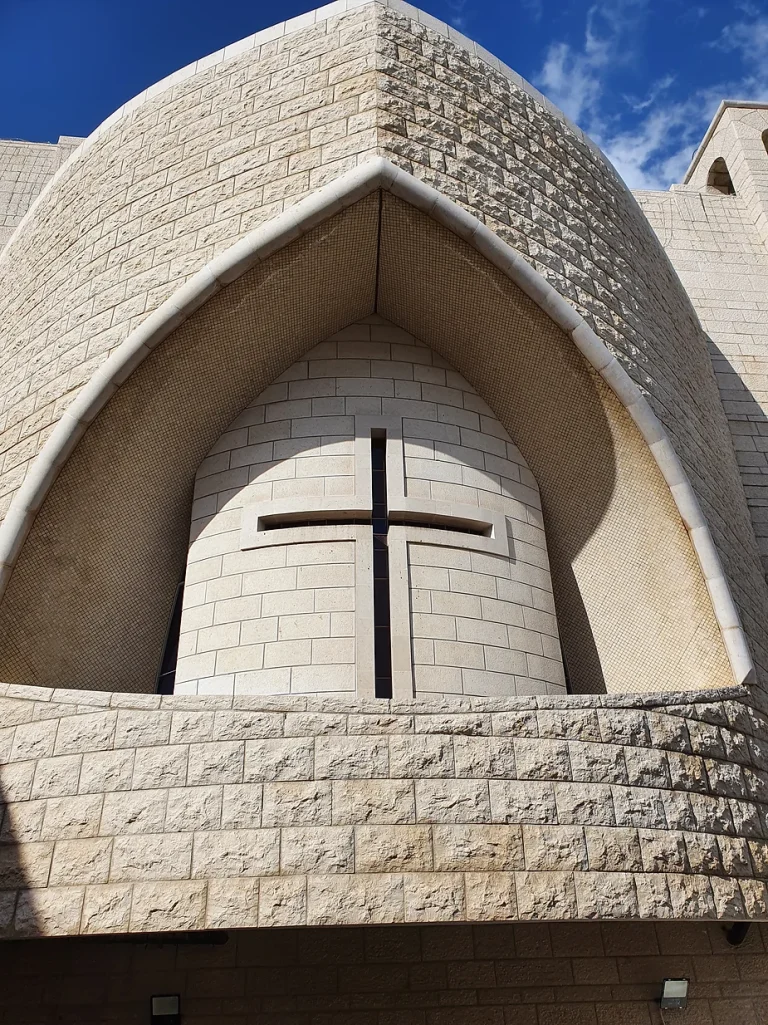
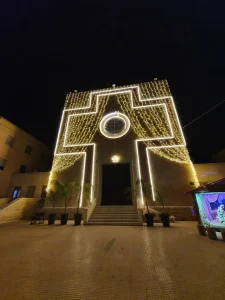
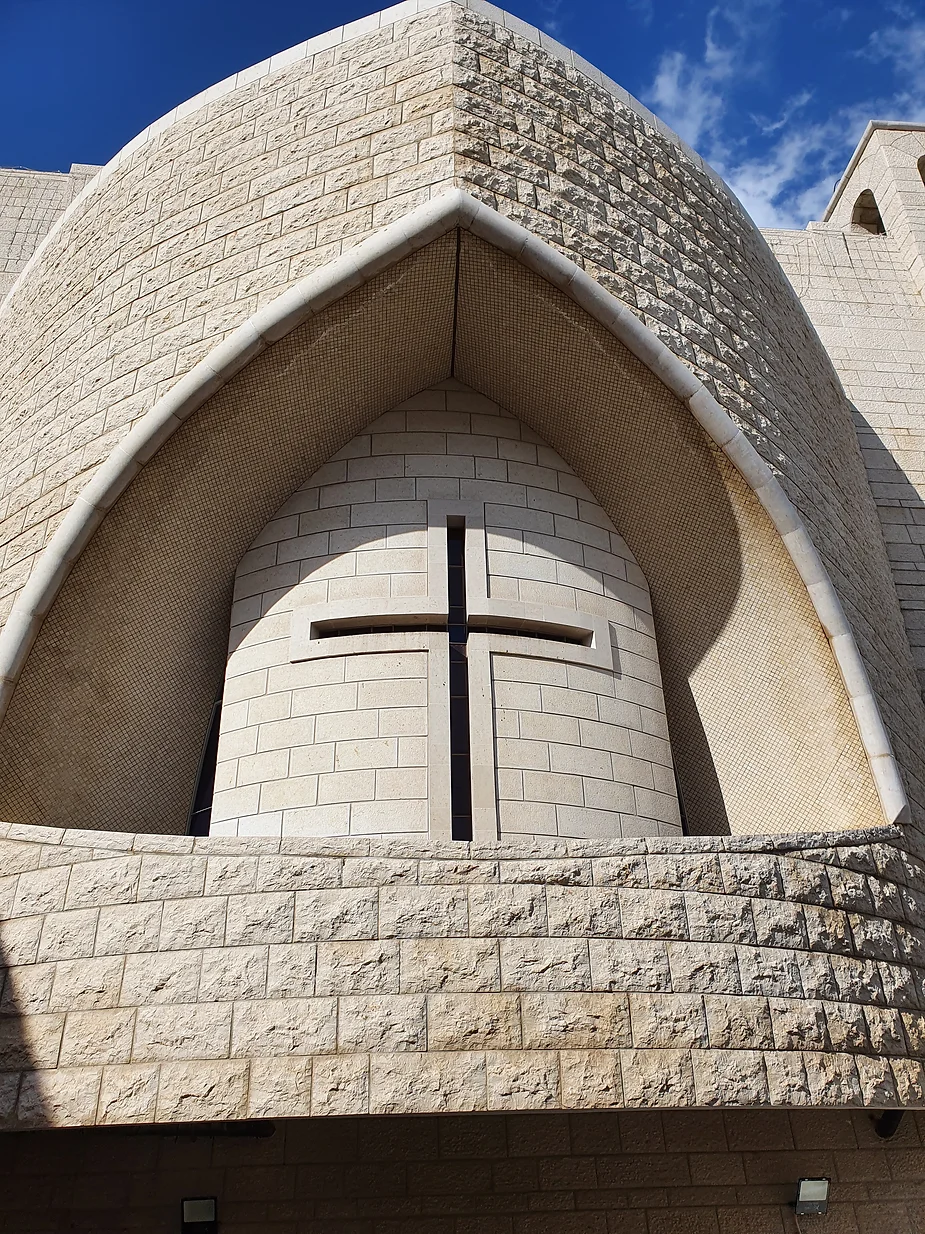
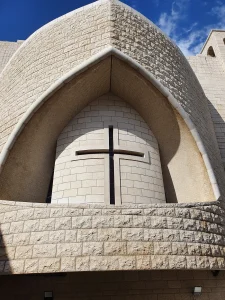
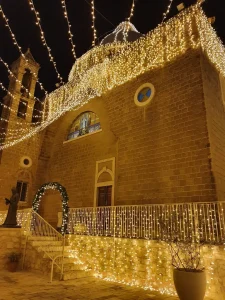
The church in the photo is St. Joseph's Church. It is located on Magenim Boulevard and is named after Joseph, the father of Jesus. The church commemorates Jesus as a boy, a significant period in his life when he was born to Mary and Joseph in Nazareth.
The Christian story touches us all, Jews and Christians alike. Jesus was a Jew, born as a Jew, in a Jewish village, prayed in a Jewish synagogue, and was buried as a Jew. Therefore, as we tour and listen to the explanations, stories, and archaeological contexts, we understand more and discover more about the Second Temple period in which Jesus lived in the land.
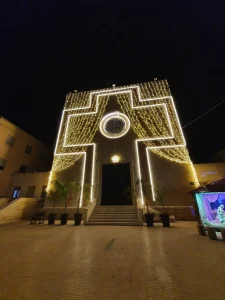
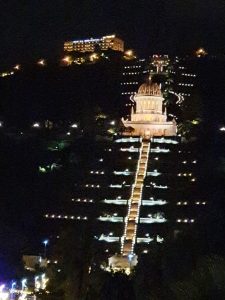
During Christmas tours, many travelers ask if the lights in the Bahá'í Gardens are also part of Haifa's Christmas decorations. But most people actually know that the Bahá'í Gardens are beautiful all year round. They really do look like part of Christmas, but what I really love is walking by them in the evening (in all seasons) and feeling a little more festive in the light of the Bahá'í Gardens.
The Bahá'í religion began in the 19th century in Persia. The founder of the religion, Bahá'u'lláh, was exiled by the Ottoman authorities in Persia to Acre, and it was there, in fact, from the prison in Acre, that he wrote the important religious books of the Bahá'í religion, where he founded the religion. Therefore, the most important place for Bahá'í believers is the Bahá'í Gardens in Acre, followed by the Bahá'í Gardens in Haifa.

Have you ever visited Nicolas at his home in Wadi Nisnas in Haifa?
Have you ever happened to meet him on the street with his decorated Santa Claus scooter, handing out candy to all the children?
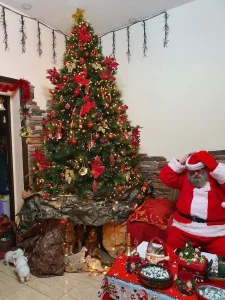
Nicola is Haifa's Santa Claus. More than 30 years ago, he decided to make a vow to donate sweets to children in hospitals, entertain them, and be there for them. Every year, his home is decorated in the spirit of the holiday and is open to everyone to receive blessings and warm, kind words.

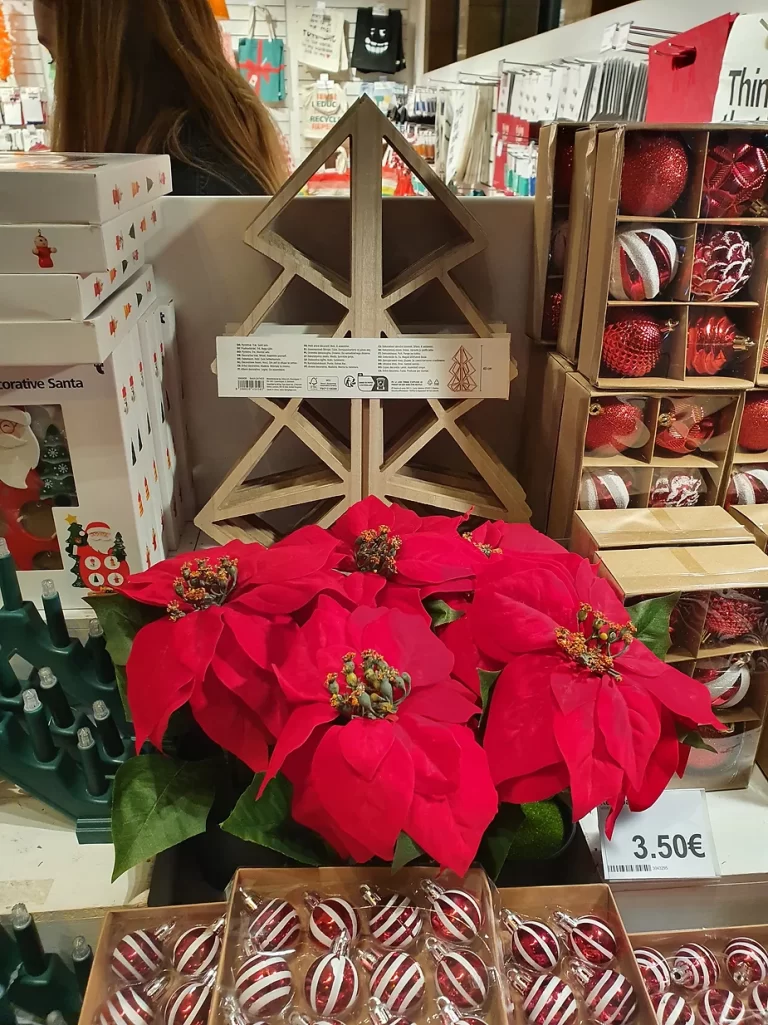
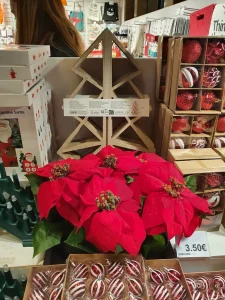
Christmas decorations and Christmas colors have not always been around. It is a long-standing tradition that began under various circumstances. Each color and decoration has its own tradition, story, context, and, of course, religious significance.
Christmas began as a religious holiday but continued as a holiday for everyone because of the colors, lights, and gifts that everyone in the world, whether Christian or not, connects directly to the atmosphere, because who among us doesn't love shopping, gifts, and mulled wine :)

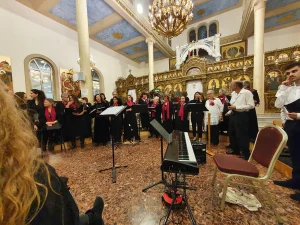
In Haifa, as in Haifa, everyone lives together and there are many different denominations and communities. Among all the different denominations, there is the Maronite Church. The Maronites are a unique, small community, in which most of the members are highly educated.
Maronites arrived in Israel from Lebanon and the surrounding area as early as the 18th century, but after the IDF withdrew from Lebanon and the SLA arrived in Israel, most of them were Maronites and settled in many cities in Israel.
One of them is Haifa. Haifa has the largest Maronite community in Israel.
Famous Maronite figures include Salim Joubran, a Supreme Court judge who passed away in March 2024, Youssef Suweid, an actor, and Norman Issa, who is also a famous actor.