Tour of the Sergei Court Museum and the Russian Compound in Jerusalem
All photos (21)
1 / 21
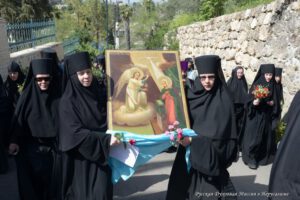
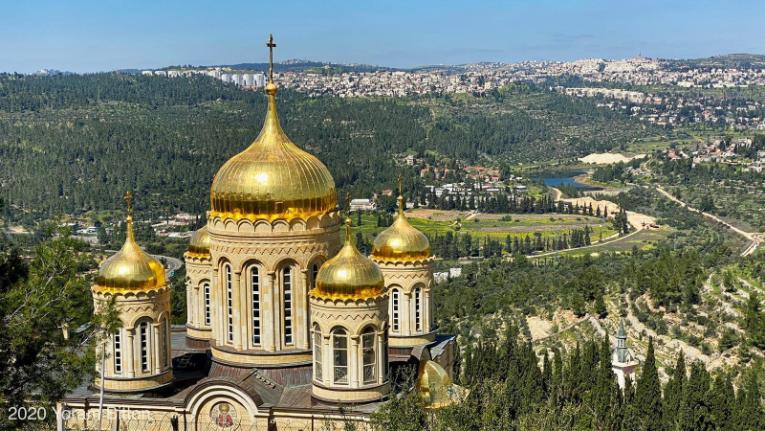
"Capella" - The Pilgrims' Dining HallSome of Sergey's yard garden decorations - A beautiful gardenSergei Museum from the insideThe Toilet Tower - the first public toilets in JerusalemFinger of Og, King of BashanThe Tower of Sergei's CourtA staircase from a 19th-century hotel that has been upgradedHoly Trinity Church from the outsideThe Consulate building of the Russian Empire from the 19th centuryHoly Trinity Church from the insideThe main entrance of Sergei's courtyardSergei's courtyard roofAn apse of a dining room where you can prayThe Consulate building of the Russian Empire from the 19th centuryThe Russian hospital from the 19th centurySign on the door of Sergei's yardWomen's hostel bedroomQueue for hot drinking waterNuns encounter a picture of Mary and the angel in Ein KeremRainwater cisternbath house
Technical details
Tour times
Saturday, February 28, 2026.
1:00 p.m. – 10:00 a.m.
Price
120 NIS per person
An additional NIS 30 for museum entrance on an open tour.
Minimum 10 people (the museum will not open if there are fewer than 10 people).
NIS 1,500 For a private tour
Includes entry to the museum on a private tour.
Meeting point
Sergei's Yard, 3 Monbez Street.
Russian Pilgrimage in the 19th Century in the Holy Land
In the 19th century, Jerusalem remained a small, poor city on the outskirts of the Ottoman Empire, but Christian countries were very interested in it. After the Russo-Turkish Crimean War (1853-1856), the city was filled with Europeans and came to life. Among other things, Russians also appeared there… An entire Russian city is being built on the former Maidan Square!
I invite you to visit the Russian Compound in Jerusalem. We will visit the museum...
Russian Pilgrimage in the 19th Century in the Holy Land
In the 19th century, Jerusalem remained a small, poor city on the outskirts of the Ottoman Empire, but Christian countries were very interested in it. After the Russo-Turkish Crimean War (1853-1856), the city was filled with Europeans and came to life. Among other things, Russians also appeared there… An entire Russian city is being built on the former Maidan Square!
I invite you to visit the Russian Compound in Jerusalem. We will visit the new Sergiy's Courtyard Museum, which will be opened especially for us, and we will also take a tour around all the "Russian buildings."
Tour structure:
Sergei's Courtyard and the Museum "Russians in the Holy Land"
Our story begins in 1847, when the Russians opened a religious and spiritual society in Jerusalem.
We will briefly talk, inside the museum, about the periods that the Russians had in the Holy Land:
⬤ The beginning of the association, even before the Russian Compound was established.
⬤ The first pilgrimage of the Russian Grand Duke Konstantin Nikolaevich.
⬤ Purchase of land northwest of the Old City.
⬤ Antonin Kapustin – The Russian Spiritual Society, in its heyday, 1865-1894.
⬤ The story of the construction of Sergei's courtyard.
"Chapel" - the pilgrims' dining room
⬤ Enjoy the paintings of artist Nikolai Koslev, which tell about the central figures in the New Testament.
⬤ Hear about what happened in the dining room:
The food of course.
Prayers.
Ceremonies.
Lectures.
The differences between today's hotel and the 19th century hotel
Let's see the differences between today's hotel, compared to the 19th century hotel, which we see in the photos:
Public toilets in the towers.
Distribution of hot drinking water that stretched into a long line.
bathhouse.
A large cistern for rainwater.
A kitchen divided into three levels.
Holy Trinity Church
⬤ Which saints are painted on the church walls?
⬤ The story of the meeting of Jesus' mother with the angel - through a special image that comes from a vineyard.
"Finger of Og" - a giant pillar inside a depression in the ground
A huge pillar inside a depression in the ground that, to this day, is unclear as to what building it was used for.
The hospital and the association building are seen from the outside.
⬤ The association building became the Magistrate's Court.
⬤ The Russian Hospital has become part of the Jerusalem Municipality that deals with parking.
These two buildings were sold to Israel by the Russians in 1964.
The 19th century Russian Empire Consulate building
In the 19th century, all consulates were located in Jerusalem and not in Tel Aviv as they are today.
Heard about the "Orange Deal" from 1964, a deal in which Israel bought land and buildings from the Russians - part of this deal was paid for in oranges.
Underground Prisoners Museum - a 150-year-old building that started as a women's hostel and became a British prison
From Sunday to Thursday you can enter the museum, which requires an entrance fee.
The decision whether to enter the museum or not is up to the group.
The history of the building
The building began as a women's hostel in the 19th century.
The British then turned the building into a prison.
Guide to historical sites and Doctor of Archaeology
◾️ Master's degree in philosophy at the State University of Yekaterinburg. ◾️Guide course.
◾️PhD from Bar Ilan University, "Jewish Antiquities in the Collection of Antonin Kapustin."
For the purpose of my research, I went to the archives of St. Petersburg University and read Kapustin's diaries there, and that's how I actually completed my doctoral research.
Additional information and frequently asked questions