Budapest Historical Sightseeing Walking Tour




















Technical details
Price
Including instruction in English by a qualified guide.
Not included: Entrance to sites (the Great Synagogue, the Basilica, the Exchange Palace), drinks and services along the way, and a tip for the guide.
Children 5–12. Youth 13–17 – €12. Babies – Free.
Weather: If the tour is canceled due to the weather – they will get you another date or a full refund.
Minimum number of participants: If the minimum number of participants is not met – we will provide a different date or tour, or a full refund.
Meeting point
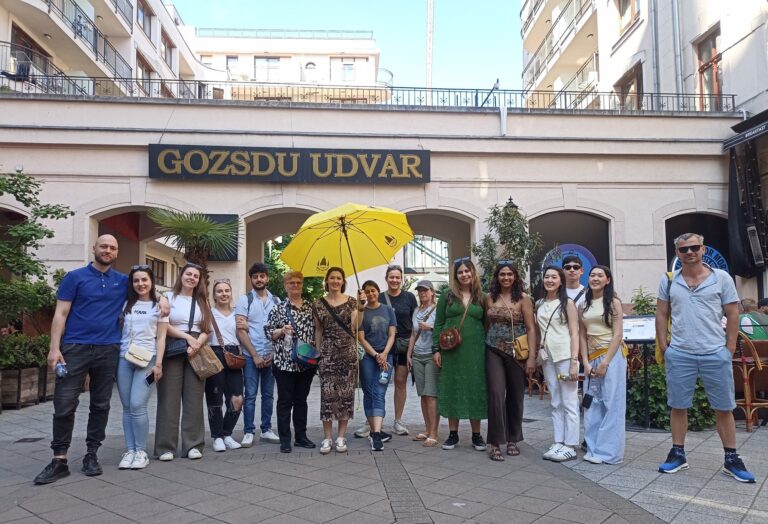
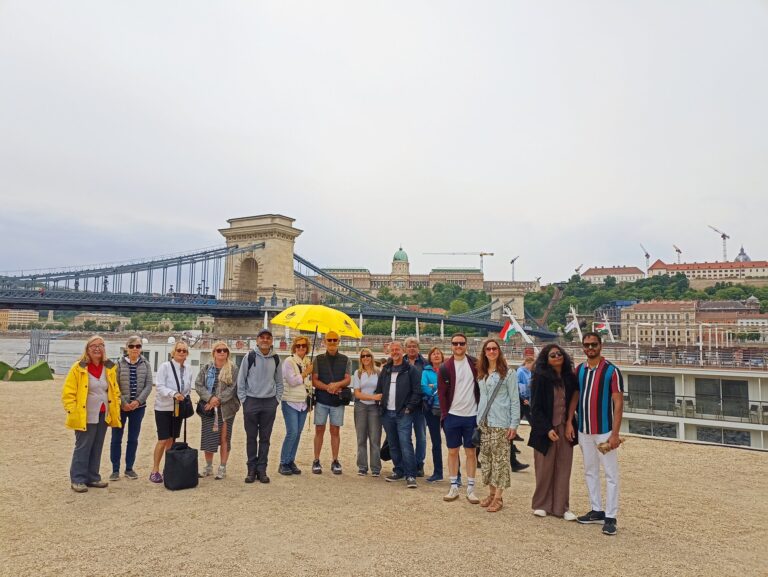
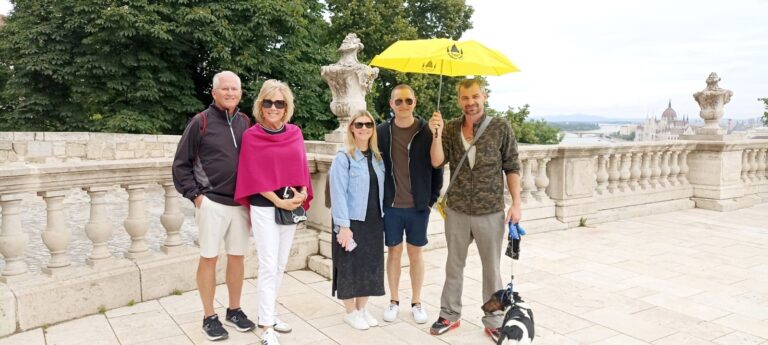
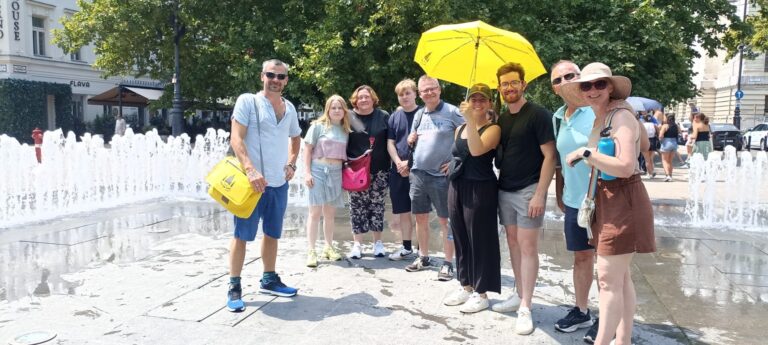
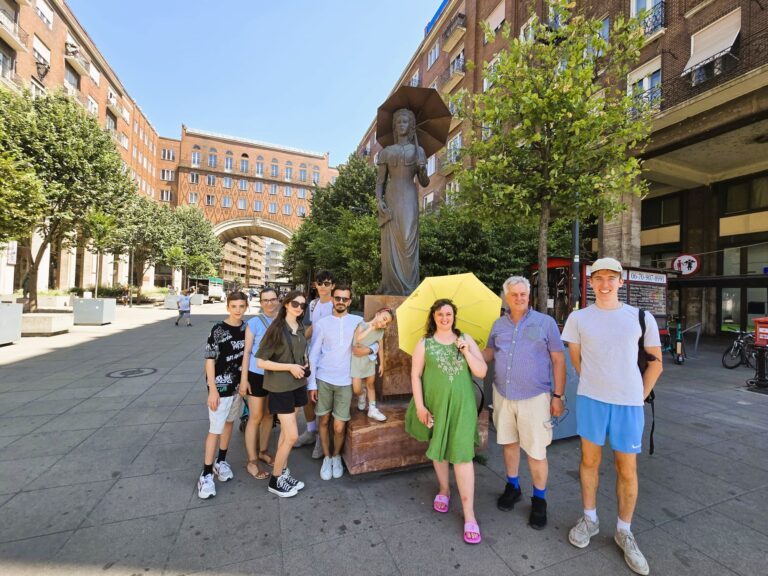
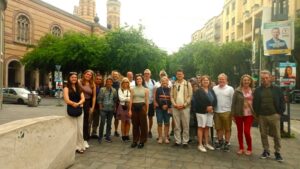
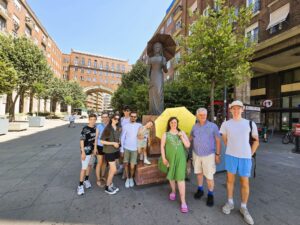
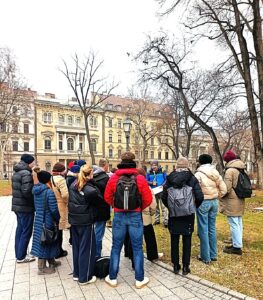
OTP Bank, Kálvin tér 12–13, 1085 Budapest – At exit B from the metro station at Kálvin tér. Look for the guide with the yellow umbrella.
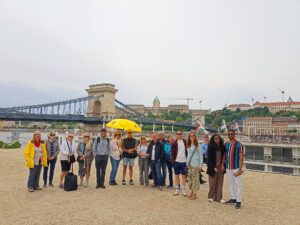
The tour ends on the Danube promenade, near the Chain Bridge, in the city center.
Notes
- A walk of about 5 kilometers – not recommended for those who have difficulty walking that distance.
- It is suitable mainly for adults and teenagers aged 12 and up. Younger children are also welcome.
- Wheelchair accessible: Please inform us in advance; the guide will adjust the route accordingly. The metro and bus to Kalvin Square are accessible.
- The guides cannot carry luggage or equipment.
- Dogs are not allowed, except guide dogs (with their documents).
- Up to 25 participants in a group.
This walking tour is exclusively designed to take guests through the historical landmarks of Budapest, show them the major tourist attractions and hidden places of Budapest, and introduce them to the greatness of Hungarian culture, architecture, and cuisine.
The stories behind the landmarks
We are qualified and licensed historians and passionate history enthusiasts, who are always digging for the fascinating stories behind the landmarks...
This walking tour is exclusively designed to take guests through the historical landmarks of Budapest, show them the major tourist attractions and hidden places of Budapest, and introduce them to the greatness of Hungarian culture, architecture, and cuisine.
The stories behind the landmarks
We're passionate, qualified, licensed historians and history tellers, always digging into the fascinating stories behind Budapest’s iconic landmarks.
Whether it’s ancient tales of kings and empires, legendary battles, royal drama or quirky local legends, we love bringing Hungary's past to life.
If you are ready to discover Budapest's historical town centre built in the Austro-Hungarian Empire era, come out on this truly fascinating walking tour with a simple, old-fashioned, traditional Hungarian man coming from the rural areas of Hungary.
From the Austro-Hungarian Empire to 1956
Come along with us for an unforgettable walking experience and learn about Hungarian history, the Austro-Hungarian Empire, the Hungarian Jewish Holocaust, the Second World War and Nazi invasion, and the Soviet Communist era.
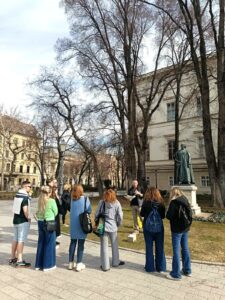
Also see the Monument to the Victims of the German Occupation, the Soviet War Memorial, and the Ronald Reagan Statue. Learn about the Hungarian Uprising against the Soviet Union in 1956 and walk past the 1956 Museum.
What Hungary gave the world
Hungary gave so much to the world, such as the Rubik's Cube, the discovery of vitamin C, the ballpoint pen, holography, electric railway traction, turbojet and ramjet propulsion.
Find out how Hungary was connected to the Carpathia ship from the story of the Titanic.
If it's your first time in Budapest, explore Hungarian history on this in-depth and affordable walking tour. Join a group with a guide who knows the city inside and out for a stroll to most of the major attractions, including the Hungarian Parliament, Europe's largest synagogue, and St. Stephen’s Basilica.
You will also see the Palace of the Stock Exchange, the first underground station in continental Europe, built in 1896, the glamorous Andrássy Avenue, and the Sisi Statue.
See you on the tour.
Tour structure:
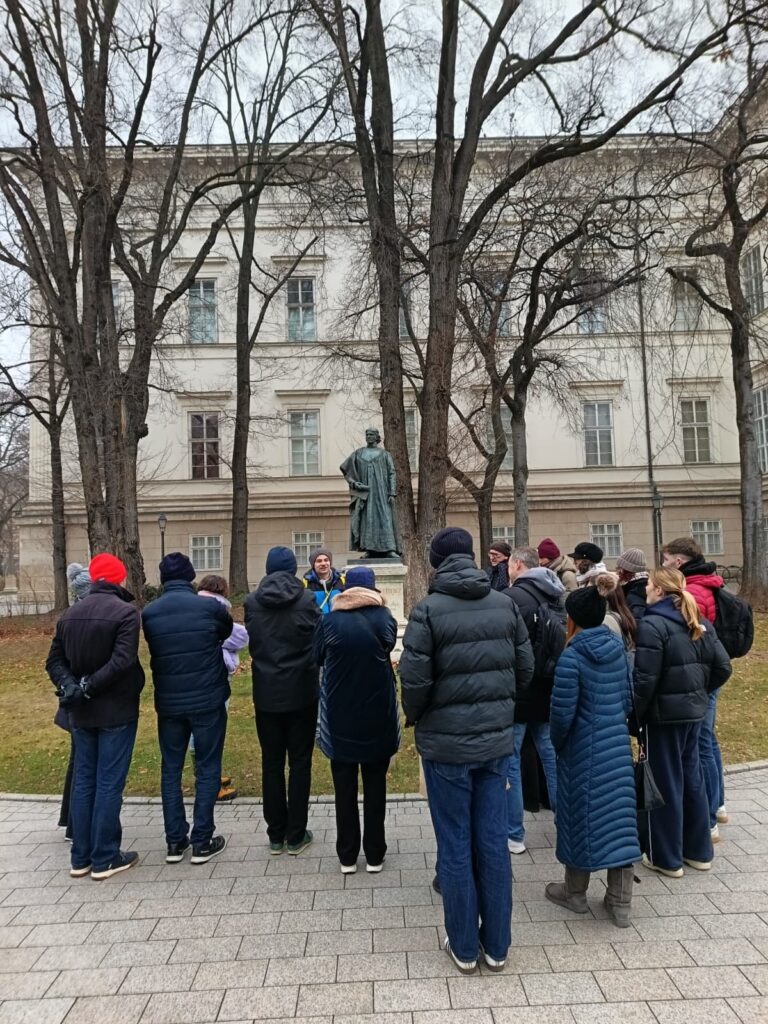
Hungarian National Museum
The history of Hungary and its people through the ages is covered in many magnificent exhibits and works of art. Count Ferenc Széchényi, one of Hungary’s most eminent aristocrats, offered his collection of books, maps and medals for the benefit of his beloved country in 1802.
His example had been followed by many – the Palatine himself, aristocrats, citizens, fellow Hungarians and even some counties! What we call today the Hungarian National Museum had evolved from these donations.
The construction of one of the most beautiful classicist palaces of Hungary began in 1837 based on the plans of Mihály Pollack. By 1846, exhibitions had been set up in the building.
On 15th March 1848, the revolutionary youth of the era declared their ideas of freedom from the stairs of the museum. These ideas then formed the basis of societal reforms and modernization taking place in Hungary.
ELTE University
The university
Founded in 1635.
Eötvös Loránd University (also known as ELTE University of Budapest) is a public research university based in Budapest, Hungary. Founded in 1635, it is the longest continuously operating university in Hungary.
Latin: Universitas Scientiarum Budapestinensis De Rolando Eötvös Nominata
The almost 30 thousand students at ELTE are organised into nine faculties, and into research institutes located throughout Budapest.
ELTE is affiliated with 7 Nobel laureates, as well as winners of the Wolf Prize, Fulkerson Prize and Abel Prize, the latest of which was Nobel Prize in Literature winner László Krasznahorkai in 2025.
Zsolnay ceramics
This ELTE university building is externally decorated with world-famous Hungarian Zsolnay ceramics.
The Zsolnay brand was established in 1853 by Ignác Zsolnay.
Miklós Zsolnay founded the factory in Pécs, Hungary, in 1853. Vilmos Zsolnay led the factory to world fame, presenting its innovative products at world fairs and international exhibitions.
To the credit of Hungarian industrialist and entrepreneur Vilmos Zsolnay, the company is still celebrated today for its dazzling designs and innovative use of materials.
This ceramic building decoration was widely used in architecture throughout the entire Austro-Hungarian Empire, and its artworks on buildings can now be found in the former territories of the Austro-Hungarian Empire's crownlands.
These include:
- Hungary
- Austria
- Transylvania (Romania)
- Krakow (Poland)
- Italy
- Croatia
- Slovakia
- Slovenia
- Vojvodina (Serbia)
- Ukraine
- Czech Republic
- Albania
- Montenegro
- Bosnia
These ornamental ceramics were extremely popular during the Austro-Hungarian Art Nouveau movement, which had a strong hold on European architecture at the time.
Several Hungarian landmark buildings, including the Parliament building and the Museum of Applied Arts, demonstrate the exceptional achievements of the Zsolnay factory in the production of architectural ceramics.
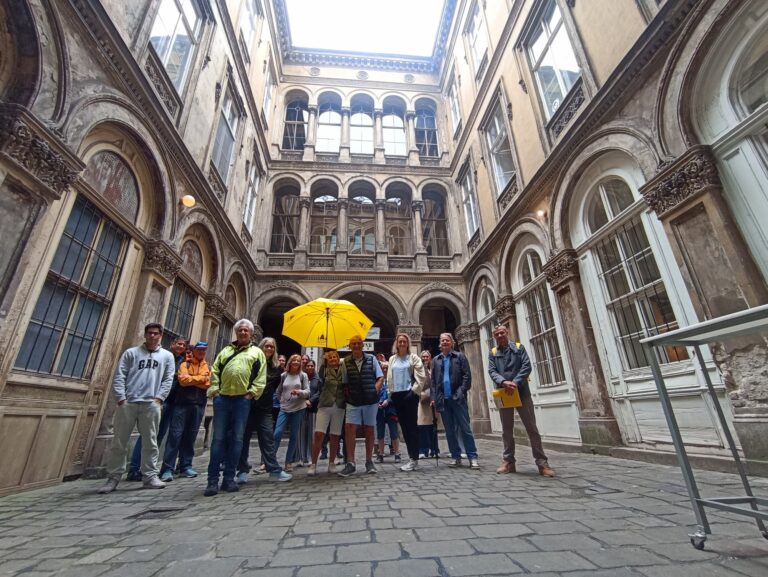
Unger House
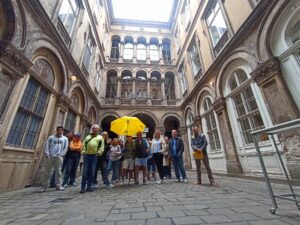
Stand in the courtyard of Miklós Ybl's unique creation, mixing many styles: Byzantine, Gothic, Moorish, Renaissance, and Romantic elements, all of which make up the glory of this fading palace built in 1853.
The Architect
Hungarian architect Miklós Ybl (1814–1891) is one of the greatest masters of the 19th century and a representative of Historicism of European relevance. When walking around in Budapest, one might notice that almost every building of historical significance shows signs of Ybl’s work.
Budapest's Jewish Quarter (on the way)
The tour travels through the Jewish quarter and allows participants to learn about the history of the district.
From the home to a vibrant Jewish community to a ghetto in the Second World War, in more recent years it has become home to artists and students, and to bustling tourist areas filled with independent shops, designers, and bars.
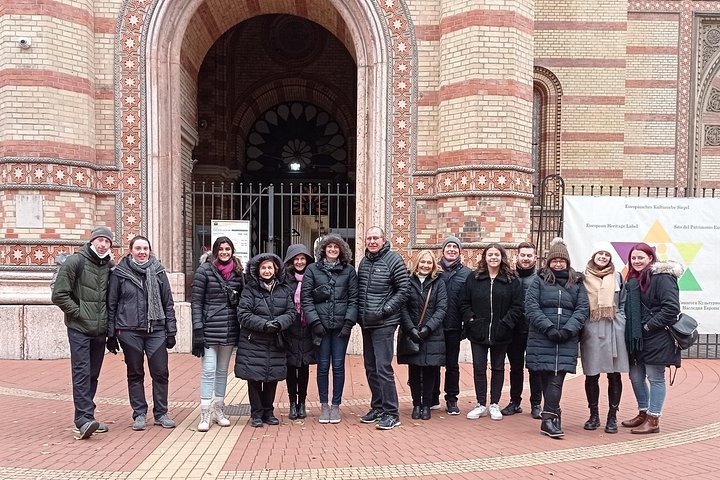
Great Synagogue / Dohány Street Synagogue
The Dohány Street Synagogue (also known as the Great Synagogue) was built between 1854 and 1859 in the Moorish Revival and Romantic Historicist styles, with the decoration based chiefly on Islamic models from North Africa and medieval Spain (the Alhambra).
The synagogue's Viennese architect, Ludwig Förster, believed that no distinctively Jewish architecture could be identified, and thus chose "architectural forms that have been used by oriental ethnic groups that are related to the Israelite people, and in particular the Arabs". The interior design is partly by Frigyes Feszl.
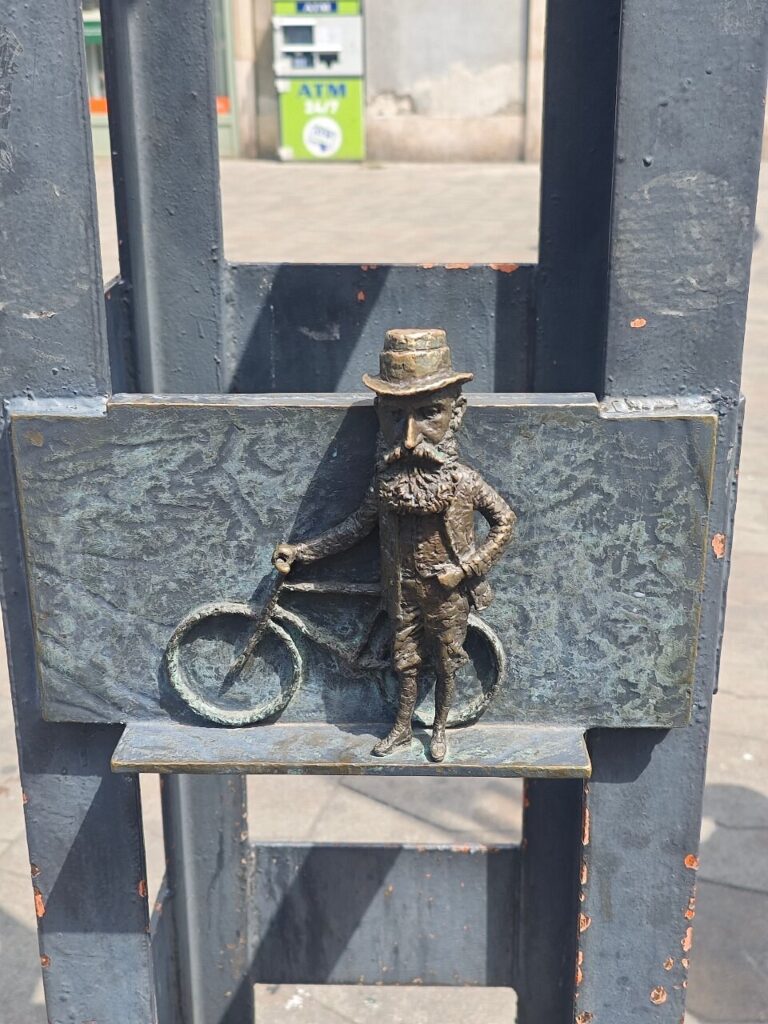
Herzl Square, Monument of Theodor Herzl
Learn about the Austro-Hungarian Jewish journalist and lawyer born in Pest, Hungary.
Though he died decades before the State of Israel’s establishment, he is considered the country’s founding father.
Sisi / Queen Elizabeth Monument
Learn about Empress Elisabeth of Austria, widely known by her nickname Sisi, who was the Empress of Austria and Queen of Hungary from 1854 until her assassination in 1898.
Crowned Queen of Hungary on June 8, 1867, following the Austro-Hungarian Compromise.
Renowned for her exceptional beauty, unconventional behaviour, and intense interest in Hungarian politics and culture.
Despite her glamorous public image, Sisi struggled with the constraints of court etiquette and clashed frequently with her mother-in-law, Archduchess Sophie.
She was instrumental in securing the Austro-Hungarian Compromise of 1867, and she lived at the Hungarian palace in Gödöllő.
She remains an iconic figure in European history, popularised by films and literature depicting her as a tragic, beauty-obsessed rebel.
Andrássy Avenue
Built in 1896 for the Millennial Celebration of Hungary.
See the greatness of Hungarian cultural architecture. This avenue is often shown in Hollywood movies such as Bel Ami.
Andrássy Avenue (Andrássy út) is a prestigious 2.3 to 2.5-kilometre boulevard in Budapest, Hungary, a UNESCO World Heritage Site since 2002. It is renowned for its Neo-Renaissance mansions, elegant facades, and status as Budapest’s primary luxury shopping district, often compared to the Champs-Élysées.
History: Construction began in 1872, and it was inaugurated in 1876, named after Prime Minister Count Gyula Andrássy.
Architecture: The Avenue features spectacular palaces, embassies, and cultural landmarks like the Hungarian State Opera House and the Liszt Ferenc Academy of Music.
Transport: The M1 Metro line, the first underground railway line on the European continent (opened in 1896), runs beneath the avenue.
This avenue is often shown in Hollywood movies and Western European movies.
Bajcsy-Zsilinszky underground station, opened in 1896
The M1 Metro line was the first electrified underground railway line on the European continent (opened in 1896) in Budapest and runs beneath the avenue.
See the great metallic applied artwork of this station and its metro line, built in the mighty Austro-Hungarian Empire.
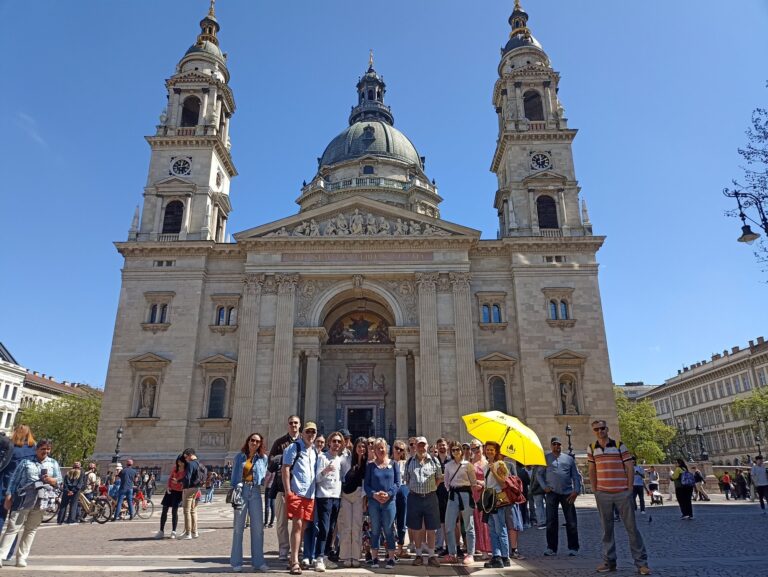
Szent István Bazilika / Saint Stephen’s Basilica
St. Stephen's Basilica (Szent István-bazilika) is a Roman Catholic basilica and co-cathedral located in Budapest, Hungary.
It is the largest church in the city and one of its most significant historical landmarks, situated within the city's UNESCO World Heritage Site Buffer Zone.
It is the third-largest church building in present-day Hungary and a co-cathedral of the Roman Catholic Archdiocese of Esztergom-Budapest.
The structure stands 96 meters (315 ft) tall, equal to the Hungarian Parliament Building, with a length of 87.4 meters and a width of 55 meters.
It can accommodate approximately 8,000 to 8,500 people in case of a national emergency such as a huge flood.
The basilica houses the mummified right hand of King Stephen I, the first King of Hungary, known as the "Holy Right."
Built in the neoclassical/neorenaissance style, construction began in 1851 (based on plans by József Hild) and was completed by Miklós Ybl and Joseph Krauser in 1905.
Zrínyi Street
Learn about world-famous Hungarian actors, actresses, magicians, classical music composers, and world-famous footballers.
Such as:
- Peter Falk – Detective Columbo
- Zsa Zsa Gabor
- Harry Houdini (Weisz Erik in Hungarian)
- Franz Liszt
- Béla Bartók
- Zoltán Kodály
- Ferenc Puskás
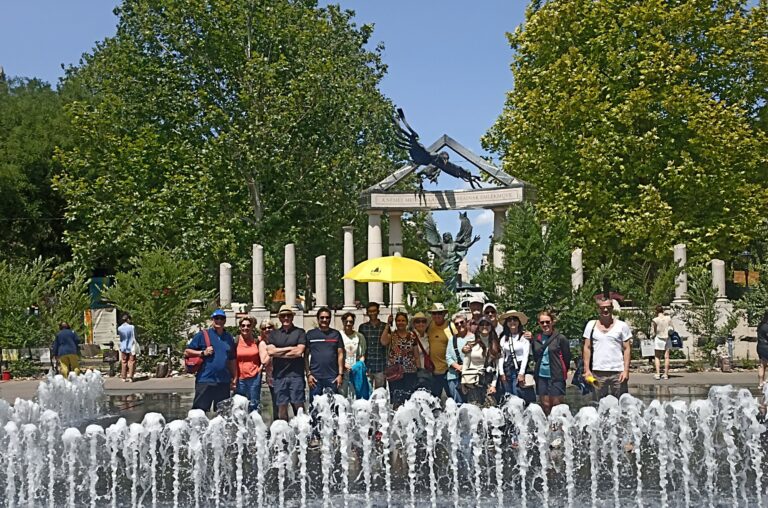
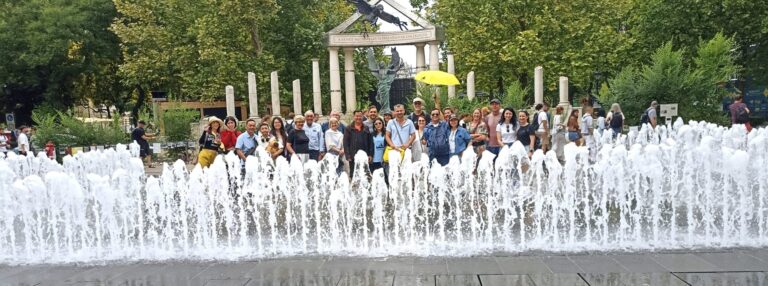
Szabadság tér / Liberty Square
Nazi invasion monument of 1944.
Learn about how Hungary was invaded by the Nazis and the devastation the country went through.
Spend some time at Szabadság tér / Liberty Square and see the communist memorial.
Stock Exchange Palace
See this beautiful landmark palace which was completed in 1905 by a Hungarian architect, Ignác Alpár, in an Art Nouveau style which actually was invented in the Austro-Hungarian Empire in 1890. Originally called the Secession style in Austria-Hungary.
This large palace nowadays serves as a movie shooting location and was often shown in Hollywood productions such as:
- Red Heat
- Blade Runner 2049
- Die Hard 5
- Red Sparrow (2018)
- Black Widow (2021)
- Alien: Romulus (2024)
- Gemini Man
- and 20 other world-famous productions
Adriatic Palace
The front of this wonderful palace was completed in 1902 by a Hungarian architect, Artúr Meinig.
This palace once was the headquarters of the Royal Hungarian sailing company, which operated in the port of Fiume, Hungary – nowadays called Rijeka in Croatia.
Learn about how the Carpathia ship from the story of Titanic was connected to the Kingdom of Hungary.
That ship was serving on a regular basis between New York City and Fiume, Hungary / Austro-Hungarian Empire. Hungarians were renting that ship from the British Empire.
Ronald Reagan Statue
Find out why Reagan is walking away from the parliament looking so happy, and also discover why Bush (statue) is standing waiting for him.
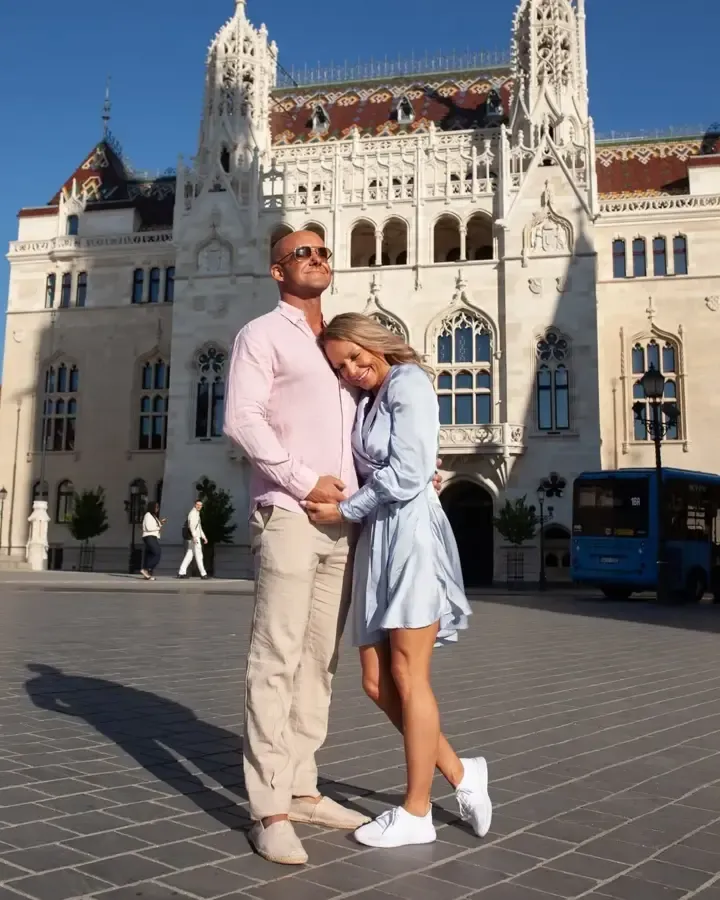
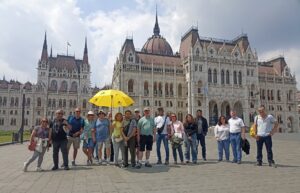
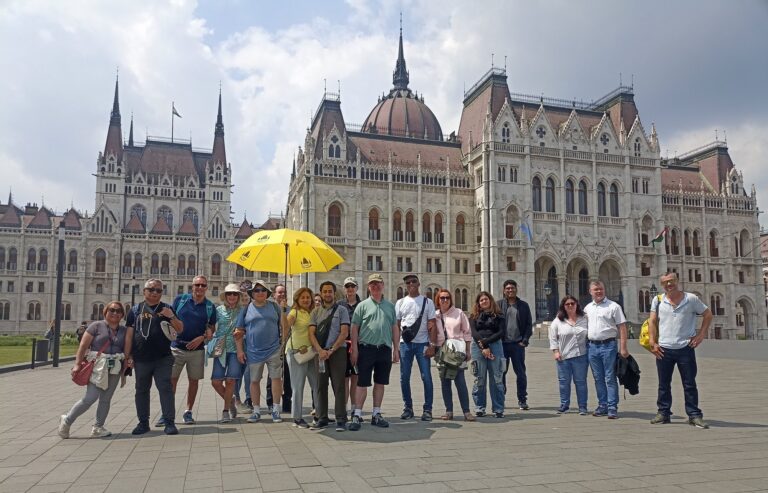
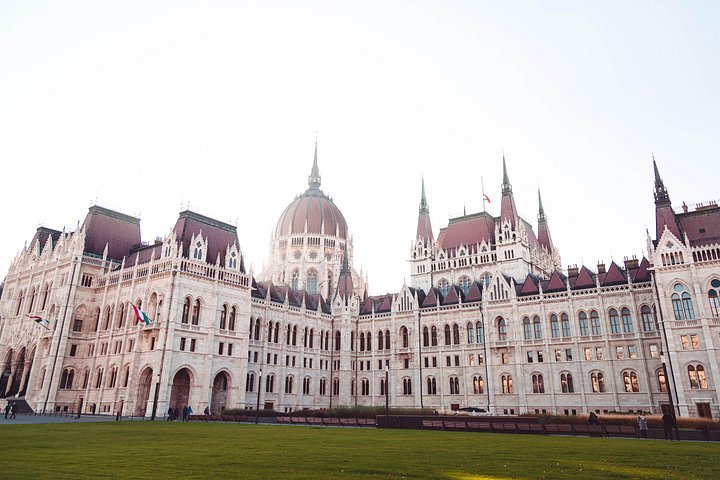
Hungarian Parliament Building
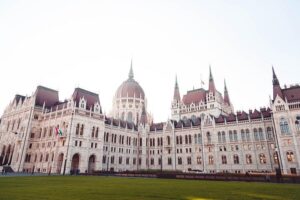
This landmark building was completed in 1905 in a wonderful neo-Gothic style, which at the time of completion was the world’s biggest parliament.
The world's first air-conditioning unit was also installed here in 1905. This building's roof was shown in Batman movies.
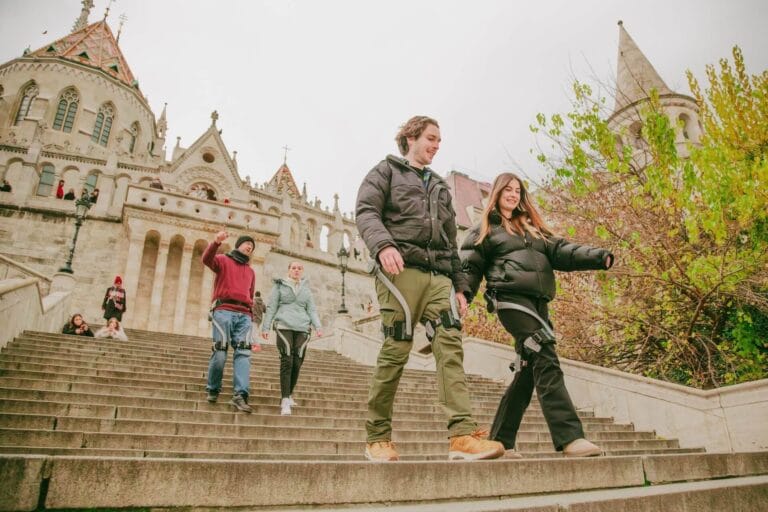
Fisherman's Bastion
Reconstructed by Frigyes Schulek in 1902. See the castle built in 1251 and the Fisherman’s Bastion from the Pest side of the river. Learn about the area’s history.
See Matthias Church, where Queen Elizabeth, aka Sisi, was crowned Queen of Hungary in 1867, with its stunning coloured tiled roof, and the Hungarian National Palace from afar on the Pest side of the river. See St. Margaret’s Island and Gellért Hill from afar on the Pest side and discover their history.
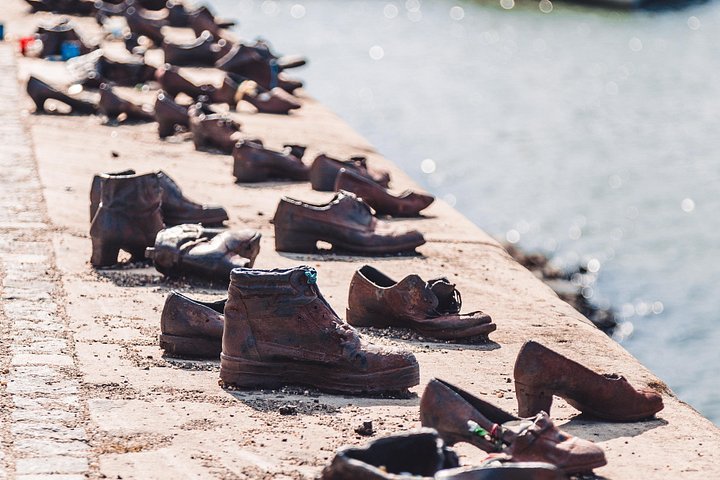
Shoes on the Danube Bank
See this incredibly simple and haunting monument of 60 pairs of shoes dedicated to the Holocaust victims who were lined up and shot on the banks.
Chain Bridge / Széchenyi Lánchíd
See and learn about the history of the bridge and its reconstruction.
The Chain Bridge was completed in 1849, which at the time of completion was the biggest and longest chain suspension bridge in the world, built by two of the best bridge builders of the British Empire, William Tierney Clark and Adam Clark.
Guide details:
Foot Tours Budapest

"We were born and raised in Hungary by traditional, old-fashioned Hungarian families. We know Budapest like the back of our hands."
⬤ Qualified and licensed historians – in Hungary, only people who studied history and tourism can get this license.
⬤ Operating since 2018 as Perfect European Tours Budapest, now Foot Tours Budapest.
⬤ We run various tours daily in English: the Budapest Historical Sightseeing Walking Tour, the Medieval Walking Tour of the Buda Castle, the Queen Elizabeth Lookout Tower tour, the Street Art walking tour and the communist history tour of Budapest.
⬤ The historical tour is rated 4.8 on Tripadvisor, with over 760 reviews.
⬤ We are identified by the yellow umbrella.
Additional information and frequently asked questions
Is there a break on the way?
Yes, a short break of about 5 minutes to buy drinks and use the restroom. Public restrooms cost 100–500 forint.
What is worth bringing?
Water, and according to the weather – sunscreen, an umbrella, or a warm jacket.